

Online Gambling: Guide to Sites, Games & Bonuses in 2026
Online gambling has transformed the way people play casino games and place bets, offering 24/7 access to entertainment from any device with an internet connection. Players can now enjoy everything from slot machines and poker to sports betting without leaving their homes. The best online gambling sites combine secure payment methods, licensed operations, and diverse game selections to create safe and enjoyable gaming experiences for players.
The digital gambling landscape includes various options like traditional online casinos, live dealer games that stream real dealers in real-time, and sweepstakes casinos that operate under different legal frameworks. Each platform offers unique features, bonus structures, and game libraries designed to attract different types of players. Understanding how these sites work and what makes them trustworthy helps players make informed decisions.
Success in online gambling depends on choosing reputable sites, understanding game mechanics, and managing bankrolls responsibly. The industry operates under complex state-by-state regulations in the US, making it important to know which options are available in each location. Smart players also take advantage of welcome bonuses and loyalty programs while setting clear limits on their gambling activities.
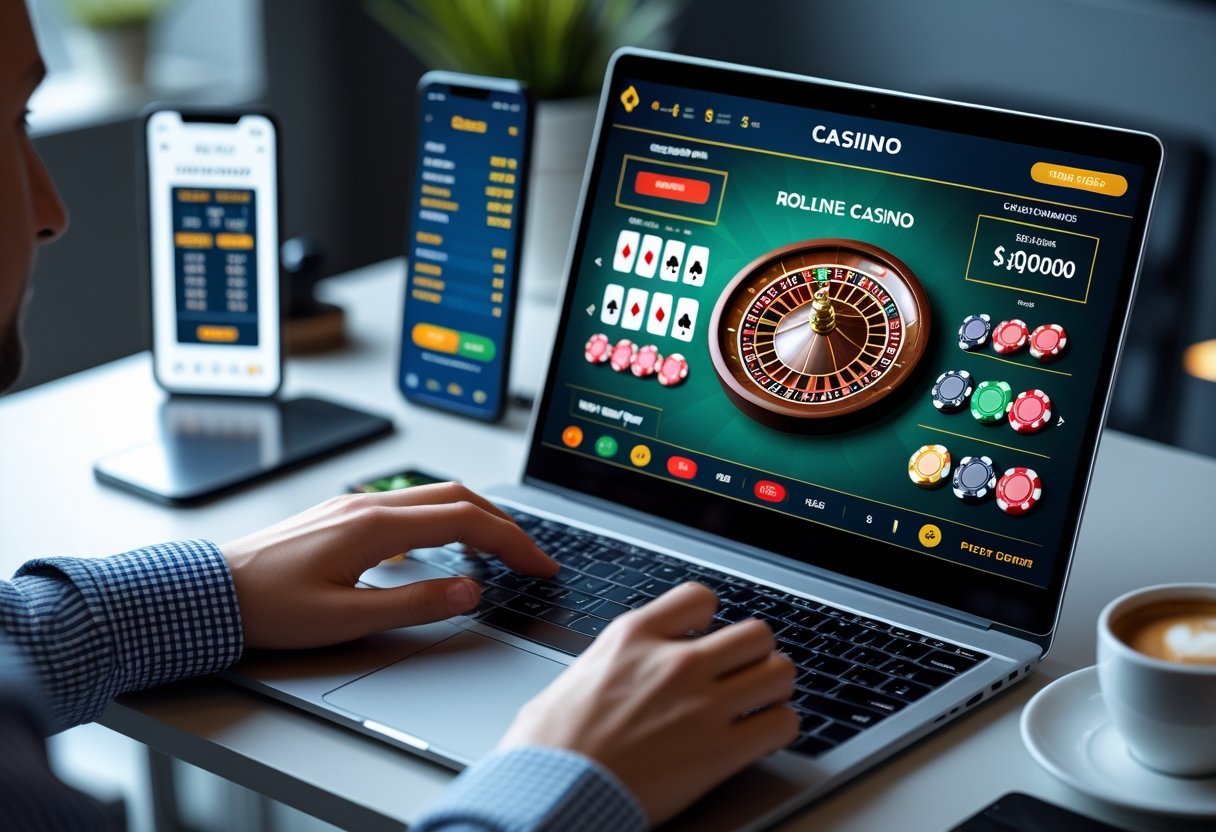
How Online Gambling Works?
Online gambling operates through digital platforms that use complex software systems to deliver games, manage player accounts, and ensure fair outcomes. These sites rely on random number generators and return-to-player rates to maintain game integrity while offering various types of gambling experiences.
Types of Online Gambling Sites
Real money online casinos represent the most common type of gambling platform. These sites offer traditional casino games like slots, blackjack, and roulette. Players deposit real money and can win actual cash prizes.
Sports betting sites allow users to wager on sporting events. They provide odds on games and matches across different sports. Many sites offer live betting during games.
Poker rooms focus specifically on poker games. Players compete against each other rather than the house. The site takes a small percentage of each pot as revenue.
Lottery and bingo sites offer number-based games. Players buy tickets or cards with the chance to win prizes. These games typically have scheduled draw times.
Fantasy sports platforms let users create teams with real players. Performance of real athletes determines winnings. These sites blend sports knowledge with gambling elements.
Online Casino Games vs Brick-and-Mortar Casinos
Online casino games use software to simulate traditional casino experiences. Players access games through web browsers or mobile apps. The games run on servers rather than physical machines.
Brick-and-mortar casinos use physical equipment like slot machines and card tables. Players must visit the casino location to play. Dealers and staff manage the games in person.
Key differences include:
- Accessibility: Online sites are available 24/7 from any location
- Game variety: Digital platforms often offer more game options
- Social interaction: Physical casinos provide face-to-face interaction
- Speed: Online games typically play faster than live games
Online sites offer bonuses and promotions more frequently. They have lower overhead costs than physical casinos. This allows them to offer better odds and more rewards.
Understanding Random Number Generators
Random number generators (RNGs) control all game outcomes in online gambling. These computer programs create unpredictable results for each game round. They ensure that no player or casino can predict results.
RNGs work by:
- Generating millions of number sequences per second
- Using complex mathematical algorithms
- Creating truly random outcomes for each spin or hand
Third-party testing companies audit RNG systems regularly. These audits verify that games produce fair and random results. Licensed gambling sites must use certified RNG technology.
Players cannot influence RNG outcomes through timing or patterns. Each game round is independent of previous results. This prevents any form of prediction or manipulation.
RTP Rates and Game Fairness
Return-to-player (RTP) rates show the percentage of money a game returns to players over time. Most online slots have RTP rates between 92% and 98%. Higher RTP rates mean better long-term odds for players.
RTP calculation example:
- Game with 96% RTP theoretically returns $96 for every $100 wagered
- The remaining 4% represents the house edge
- These percentages apply over millions of game rounds
Online gambling sites must display RTP rates for their games. This information helps players make informed choices. Different games have different RTP percentages.
Table games typically offer better RTP rates:
| Game Type | Typical RTP Range |
|---|---|
| Blackjack | 99.2% – 99.8% |
| Roulette | 94.7% – 97.3% |
| Slots | 92% – 98% |
| Baccarat | 98.9% – 99.2% |
RTP rates work over long periods with many players. Individual sessions may vary significantly from these percentages. The house always maintains a mathematical advantage.

Choosing the Best Online Gambling Sites
Selecting a reliable online gambling site requires careful evaluation of licensing credentials, game selection, and operator reputation. The most important factors include verified licensing from recognized authorities and partnerships with established software providers.
Top-Rated Online Casinos for US Players
DraftKings Casino leads the market with comprehensive sports betting integration and extensive slot collections. The platform operates in multiple states including Michigan, New Jersey, and Pennsylvania.
BetMGM Casino offers one of the largest game libraries among legal online casinos. Players access over 1,000 titles including exclusive MGM-branded games.
Caesars Palace Online Casino provides premium gaming experiences with generous welcome bonuses. The site features live dealer games and progressive jackpots.
Other notable operators include:
- FanDuel Casino – Strong mobile app and fast payouts
- BetRivers Casino – Extensive table game selection
- Fanatics Casino – Growing game portfolio with competitive bonuses
Ignition Casino serves players in states without regulated markets. Wild Casino accepts cryptocurrency payments and offers 24/7 customer support.
Sweepstakes casinos like Chumba and LuckyLand provide alternatives in restricted states. These platforms use virtual currencies instead of direct money wagering.
Evaluating Casino Safety and Licensing
Licensed online casinos must obtain approval from state gaming regulators. New Jersey Division of Gaming Enforcement maintains strict oversight of operators in the Garden State.
Michigan Gaming Control Board licenses casinos serving Michigan residents. These regulators conduct background checks and financial audits.
International licenses from Malta Gaming Authority and Kahnawake Gaming Commission indicate legitimate operations. However, US players should prioritize domestic licenses when available.
SSL encryption protects financial transactions and personal data. Look for 256-bit encryption certificates displayed on casino websites.
eCOGRA certification ensures fair gaming practices and random number generation. This independent testing agency audits casino software regularly.
Payment processing security includes segregated player funds and multiple banking options. Reputable sites offer credit cards, e-wallets, and bank transfers.
Software Providers and Game Variety
Evolution Gaming dominates the live dealer market with professional studios and real-time gameplay. Their games include blackjack, roulette, and game show formats.
Microgaming develops progressive jackpot slots like Mega Moolah. This provider created some of the first online casino games in the 1990s.
NetEnt produces high-quality slots with innovative features. Popular titles include Starburst and Gonzo’s Quest.
IGT brings land-based casino favorites online. Their slots include Cleopatra and Wheel of Fortune.
AGS specializes in interactive slot machines with bonus features. The company focuses on player engagement and retention.
Game variety indicators include:
- 500+ slot machines
- 50+ table games
- Live dealer sections
- Video poker options
- Specialty games
Top casinos partner with multiple software providers to offer diverse gaming experiences. Single-provider sites typically have limited game selections.

Popular Online Casino Games
Online casinos offer hundreds of game options across multiple categories. Slot machines dominate with thousands of themes and jackpot opportunities, while table games provide strategic gameplay and live dealer experiences bring authentic casino atmosphere to players’ screens.
Slot Machines and Real Money Slots
Online slots represent the most popular category at digital casinos. These games feature spinning reels with various symbols that players match to win prizes.
Real money slots come in many forms. Classic slots use three reels and simple paylines. Video slots offer five or more reels with bonus features like free spins and wild symbols.
Progressive jackpots create the biggest winning opportunities. These games link across multiple casinos, building prize pools that can reach millions of dollars. Popular titles include Mega Moolah and Divine Fortune.
Slot games cover every theme imaginable. Players find adventure themes, fruit machines, sports topics, and movie tie-ins. Most slots allow bets from pennies to hundreds of dollars per spin.
The variety of games means something exists for every player preference. High volatility slots offer big wins but less frequently. Low volatility games pay smaller amounts more often.
Table Games: Blackjack, Roulette, and More
Virtual table games recreate classic casino experiences through digital interfaces. These games use random number generators to ensure fair outcomes.
Blackjack remains the most strategic option. Players try to beat the dealer without exceeding 21 points. European blackjack uses one deck and offers favorable rules for players.
American roulette features 38 numbered pockets including zero and double zero. Players bet on where the ball will land on the spinning wheel. European roulette offers better odds with only one zero.
Baccarat provides simple gameplay where players bet on player, banker, or tie outcomes. The game requires no skill and offers fast-paced action.
Craps involves dice rolling with numerous betting options. Online versions simplify the complex betting layout through clear graphics and automated systems.
Live Dealer Casino Games
Live casino games stream real dealers from professional studios. Players interact with human dealers through chat while playing with real cards and wheels.
Live dealer games include blackjack, roulette, baccarat, and poker variations. HD cameras capture multiple angles of the action for an immersive experience.
These games combine online convenience with authentic casino atmosphere. Players see every card dealt and wheel spin in real time.
Live dealer casino games operate on fixed schedules with professional dealers working shifts. Multiple tables run simultaneously to accommodate different betting limits.
The social aspect sets live games apart. Players chat with dealers and other participants, creating community feelings often missing from standard online games.
Video Poker and Specialty Games
Video poker blends slot machine mechanics with poker strategy. Players receive five cards and choose which ones to keep or discard for the best possible hand.
Popular variations include Jacks or Better, Deuces Wild, and Joker Poker. Each version offers different wild cards and payout structures.
Skilled players can achieve return-to-player rates above 99% with optimal strategy. This makes video poker one of the most player-friendly casino games available.
Specialty games add variety beyond traditional options. Crash games feature rising multipliers that can end at any moment. Fish table games use arcade-style shooting mechanics.
Keno resembles lottery drawings where players select numbers hoping they match the drawn results. Scratch cards offer instant win opportunities with various themes and prize structures.
Bonuses, Promotions, and Rewards
Online casinos use bonuses and promotions to attract new players and keep existing ones engaged. These offers range from welcome packages that match deposits to daily rewards that provide ongoing value.
Welcome Bonuses and Match Bonuses
Welcome bonuses are the most common promotions new players encounter when signing up at online casinos. These bonuses typically match a percentage of the first deposit, ranging from 50% to 200% of the deposited amount.
How Match Bonuses Work:
- Deposit $100 with a 100% match bonus = $200 total to play
- Higher percentages offer more bonus funds
- Most bonuses have maximum limits (e.g., “200% up to $300”)
Deposit match bonuses usually require wagering requirements between 20x and 50x the bonus amount before withdrawal. Players must read terms carefully to understand which games count toward these requirements.
Many casinos offer multi-deposit welcome packages. These spread bonuses across the first three to five deposits rather than just the initial one.
Key Features to Compare:
- Match percentage (100%, 150%, 200%)
- Maximum bonus amount
- Wagering requirements
- Time limits to use bonus
- Eligible games
No Deposit Bonuses and Free Spins
No deposit bonuses let players try casinos without risking their own money. These promotions provide small amounts of bonus cash or free spins just for creating an account.
Common No Deposit Offers:
- $5-$25 in bonus cash
- 10-50 free spins on specific slots
- Limited-time trial periods
Casino promo codes are sometimes required to claim these bonuses. Players enter the code during registration or in the cashier section.
Free spins typically apply to featured slot games chosen by the casino. Winnings from bonus spins usually have wagering requirements before becoming withdrawable cash.
Important Restrictions:
- Higher wagering requirements than deposit bonuses
- Maximum cashout limits
- Game restrictions
- Shorter expiration times
No deposit bonuses help players test game quality and site features before committing real money.
Loyalty Rewards and Cashback Offers
Loyalty programs reward regular players with points, tier status, and exclusive perks. Programs like Caesars Rewards demonstrate how casinos create value for returning customers.
Typical Loyalty Benefits:
- Points earned on every wager
- Tier-based rewards (Bronze, Silver, Gold)
- Exclusive bonus offers
- Personal account managers
- Faster withdrawal processing
Cashback bonuses return a percentage of losses over specific periods. These promotions typically offer 5-25% back on net losses weekly or monthly.
Casino rewards programs often include non-monetary benefits like birthday bonuses, holiday promotions, and invitations to special events.
VIP Program Features:
- Higher deposit and withdrawal limits
- Custom bonuses based on play style
- Dedicated customer support
- Physical rewards like electronics or trips
Players advance through tiers by meeting wagering or deposit thresholds set by each casino.
Referral and Daily Promotions
Refer-a-friend bonuses reward players for bringing new customers to the casino. Both the referrer and new player typically receive bonuses when the referred player makes their first deposit.
Referral Bonus Structure:
- $25-$100 for successful referrals
- Requirements for referred player activity
- Limits on number of referrals per month
Daily login bonuses provide small rewards for consistent play. These promotions might offer free spins, bonus cash, or loyalty points just for logging into the account.
Common Daily Promotions:
- Monday reload bonuses (deposit match offers)
- Wednesday free spins on featured games
- Weekend profit boosts on specific bets
Seasonal promotions tied to holidays or major events often provide enhanced rewards. These limited-time offers frequently include higher match percentages or larger free spin packages.
Daily promotions help maintain player engagement between larger welcome bonuses and loyalty milestones.
Banking, Payments, and Security
Online gambling sites offer various payment methods for deposits and withdrawals, with transaction speeds ranging from instant to several business days. Security protocols protect financial data through encryption and fraud detection systems.
Deposits and Withdrawal Methods
Real money casinos support multiple payment options to meet different player needs. Credit and debit cards remain the most popular choice, with Visa and Mastercard accepted at most sites.
E-wallets like PayPal, Skrill, and Neteller provide faster processing times. These services act as middlemen between banks and gambling sites. They offer an extra layer of security by keeping banking details private from operators.
Bank transfers appeal to players who want direct transactions. Wire transfers and ACH payments take longer but handle large amounts well. Some sites partner with PayNearMe for cash deposits at retail locations.
Prepaid cards give players spending control. These cards work like gift cards and prevent overspending. Popular options include Paysafecard and prepaid Visa cards.
Mobile casino apps often support carrier billing. This lets players charge deposits to phone bills. The method works well for small amounts but has strict limits.
Fast Payouts and Transaction Speed
Fast payouts vary significantly by payment method and casino. E-wallets typically process withdrawals within 24 hours. Credit cards take 3-5 business days, while bank transfers need 5-7 days.
Some operators offer instant withdrawals for verified accounts. These sites process payments immediately after approval. Players should complete identity verification early to avoid delays.
Processing times include two phases: casino approval and payment method transfer. Casino approval takes 24-48 hours at most sites. The payment provider then handles the actual transfer.
Stake and similar platforms emphasize quick processing. They pre-approve regular players and maintain faster internal systems. Weekend and holiday processing may still cause delays.
Withdrawal limits affect payout speed. Higher amounts often require additional security checks. VIP players usually get higher limits and priority processing.
Using Cryptocurrencies for Gambling
Bitcoin and other cryptocurrencies offer unique advantages for online gambling. Transactions process within minutes regardless of location. Crypto payments bypass traditional banking restrictions in many regions.
Popular gambling cryptocurrencies include Bitcoin, Ethereum, Litecoin, and Dogecoin. Each has different transaction speeds and fees. Bitcoin remains most widely accepted but has higher fees during network congestion.
Crypto gambling provides enhanced privacy. Players only need wallet addresses instead of personal banking information. Blockchain technology creates permanent transaction records while maintaining anonymity.
Exchange rate volatility affects crypto gambling. Bitcoin values change rapidly, impacting deposit and withdrawal amounts. Some sites offer stablecoin options to reduce this risk.
Setting up crypto payments requires a digital wallet. Players must buy cryptocurrency from exchanges before depositing. The process involves more steps than traditional payments but offers greater control.
Legal Landscape of Online Gambling in the US
Online gambling laws in the United States operate through a complex system where individual states decide their own regulations while federal oversight provides broader guidelines. Currently, only seven states allow full online casino operations, while many others permit specific forms like sports betting or poker.
State Regulations and Jurisdictions
The legal framework for online gambling varies dramatically across US states. Seven states currently permit comprehensive online gambling, including casino games, poker, and sports betting.
States with Full Online Gambling:
- New Jersey
- Pennsylvania
- Michigan
- West Virginia
- Delaware
- Connecticut
- Rhode Island
New Jersey online casinos launched in 2013 and generated over $506 million in revenue during July 2023. The state serves as a model for other jurisdictions considering legalization.
Pennsylvania online casinos became legal in 2017 when Governor Tom Wolf signed comprehensive gambling legislation. The state allows casino games, poker, daily fantasy sports, and sports betting.
Michigan online casinos operate under 2019 legislation that legalized all forms of online gambling. The state’s approach provides clear regulatory guidelines for operators.
Legal Requirements:
- Players must be 21 years old for casino games
- Age verification is mandatory
- Geolocation technology confirms player location
- Licensed operators only
The remaining 43 states prohibit online casino gambling. However, many allow sports betting or daily fantasy sports while restricting casino games.
Regulatory Bodies and Oversight
Each state with legal online gambling operates its own regulatory agency. These bodies issue licenses, monitor compliance, and ensure player protection standards.
Key State Regulators:
- New Jersey: Division of Gaming Enforcement
- Pennsylvania: Gaming Control Board
- Michigan: Gaming Control Board
- Delaware: Gaming Enforcement Division
These agencies work closely with organizations like the National Council on Problem Gambling (NCPG) to address addiction concerns. The NCPG provides resources and support systems for players across all legal gambling states.
Regulatory oversight includes regular audits of gaming software, financial monitoring of operators, and enforcement of responsible gambling measures. Licensed operators must maintain segregated player funds and undergo background checks.
Federal agencies like the Department of Justice provide guidance on interstate gambling laws. The Wire Act and other federal statutes influence how states structure their regulations, particularly for multi-state operations.
Responsible Gambling and Player Protection
Online gambling operators must provide tools and resources to help players maintain control over their gaming activities. Self-exclusion programs and deposit limits serve as primary safeguards, while support organizations offer assistance for those who develop gambling problems.
Setting Deposit Limits and Self-Exclusion
Deposit limits allow players to control how much money they can add to their gambling accounts within specific time periods. Players can set daily, weekly, or monthly limits that prevent them from spending beyond their budget.
Most licensed operators offer three types of deposit limits:
- Daily limits – Control spending within 24 hours
- Weekly limits – Set maximum deposits for seven days
- Monthly limits – Cap total deposits for 30 days
Self-exclusion programs provide a more comprehensive protection method. Players can temporarily or permanently ban themselves from gambling sites for periods ranging from 24 hours to several years.
When players activate self-exclusion, operators must immediately close their accounts and prevent access to all gambling services. The player cannot reverse this decision during the chosen exclusion period.
Some jurisdictions maintain central self-exclusion databases. These systems block excluded players from accessing any licensed gambling site within that region.
Recognizing Problem Gambling
Problem gambling affects approximately 1-3% of the adult population. Early recognition of warning signs helps prevent serious financial and personal consequences.
Behavioral warning signs include:
- Gambling for longer periods than planned
- Chasing losses with bigger bets
- Lying about gambling activities
- Borrowing money to gamble
Financial indicators often appear first. Players may notice they cannot pay bills, max out credit cards, or take cash advances to fund gambling activities.
Emotional symptoms include anxiety, depression, or mood swings related to gambling outcomes. Players may feel guilty about their gambling but continue despite negative consequences.
Many gambling sites now use algorithms to detect risky behavior patterns. These systems can identify players who show signs of problem gambling and trigger automatic interventions.
Support Resources and Organizations
Gamblers Anonymous operates free support groups in communities across the United States. These peer-led meetings follow a 12-step recovery program similar to Alcoholics Anonymous.
GamTalk provides 24/7 online chat support for people affected by gambling problems. The service connects users with trained counselors who offer immediate assistance and guidance.
Professional counseling services specialize in gambling addiction treatment. Many therapists use cognitive behavioral therapy to help patients change problematic thinking patterns about gambling.
National helplines offer confidential support:
- National Council on Problem Gambling: 1-800-522-4700
- Crisis Text Line: Text HOME to 741741
Financial counseling services help problem gamblers manage debt and rebuild their finances. These programs often work alongside gambling addiction treatment to address both issues simultaneously.
Frequently Asked Questions
Online gambling involves specific legal requirements, safety considerations, and strategic choices that players need to understand. Players must verify age requirements, choose licensed casinos, and understand how different games and bonuses work.
What are the legal requirements for gambling online with real money?
Players must be at least 18 years old in most states, though some require 21 years. They need to provide valid identification during registration. This includes a driver’s license, passport, or state ID card.
Online casinos verify player identity through document uploads. Players must live in states where online gambling is legal. Some sites require proof of address like utility bills.
Players cannot use fake information or shared accounts. Each person can only have one account per casino. Breaking these rules leads to account closure and fund seizure.
How do you identify legitimate and safe online casinos?
Licensed casinos display their license information at the bottom of their website. They hold licenses from state gaming commissions or international authorities. Players should verify these licenses on the regulator’s official website.
Safe casinos use SSL encryption to protect personal data. They display security certificates and use secure payment methods. Legitimate sites have clear terms and conditions that are easy to read.
Trustworthy casinos offer customer support through live chat, email, or phone. They respond quickly to player questions. Good casinos also have positive reviews from real players online.
Are there any no deposit online casinos that allow real money play?
Many casinos offer no deposit bonuses that let players win real money. These bonuses give free credits or free spins without requiring a deposit. Players can keep winnings after meeting wagering requirements.
No deposit bonuses typically range from $5 to $25 in free credits. Some casinos give 10 to 50 free spins instead. Players must complete account verification before claiming these offers.
Wagering requirements apply to all winnings from no deposit bonuses. Players must bet the bonus amount 10 to 50 times before withdrawal. Maximum withdrawal limits often cap winnings at $50 to $100.
What strategies can you use to improve your chances in online slots?
Players should choose slots with high return-to-player percentages above 96%. These games give back more money over time. Slot information pages show RTP percentages for each game.
Managing bankroll helps players last longer and have more chances to win. Setting daily or session limits prevents overspending. Players should bet smaller amounts to extend their playing time.
Progressive jackpot slots offer the biggest prizes but have lower regular payouts. Players who want frequent smaller wins should choose regular slots. Bonus features like free spins increase winning opportunities without extra cost.
In which states is internet gambling currently permitted?
Seven states allow online casino gambling: New Jersey, Pennsylvania, Michigan, West Virginia, Connecticut, Delaware, and Rhode Island. Each state has its own licensed operators and regulations.
Online sports betting is legal in over 30 states as of 2025. This includes major states like New York, California, and Texas. More states continue to pass sports betting laws each year.
Players must be physically located within state borders to gamble online. Casinos use geolocation technology to verify player location. Traveling to another state may block access to some gambling sites.
What do players typically look for in an online gambling platform?
Game variety ranks as the top priority for most players. They want access to slots, table games, and live dealer options. Popular platforms offer hundreds of different games from multiple software providers.
Fast and secure payment options are essential for player satisfaction. Players prefer sites that accept credit cards, e-wallets, and bank transfers. Quick withdrawal processing within 24 to 48 hours improves the player experience.
Customer support quality affects player loyalty significantly. Players value 24/7 live chat support with knowledgeable agents. Mobile compatibility also matters since many players use smartphones and tablets to gamble.